
Fabric RTI 101: Streaming to Warehouses

Warehouses in Microsoft Fabric are designed for structured, relational analytics — and they’re a perfect destination for streaming data that fits those patterns.
In many organizations, data warehouses have traditionally been refreshed through nightly or hourly batch loads. That meant Power BI dashboards and reports were always slightly behind — reflecting yesterday’s or last hour’s data.
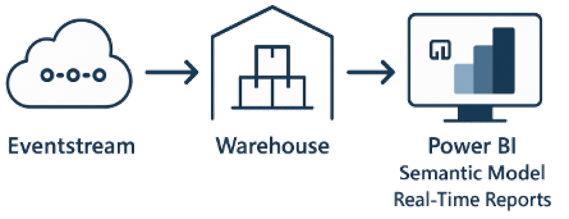
With Fabric Eventstreams, we can now stream data directly into Warehouse tables, especially into fact tables that support BI models. This means data becomes queryable within seconds of arrival, rather than waiting for the next batch window.
For example, you could stream incoming sales transactions, financial postings, or supply chain events directly into a fact table. Power BI, connected via DirectQuery or semantic models, can then visualize that data almost instantly — allowing decision-makers to monitor operational performance in near real time.
Because Warehouses are relational by design, they use familiar SQL syntax. That makes them ideal for teams who already work with traditional BI and reporting tools. Data engineers, analysts, and finance teams can all use their existing SQL knowledge to query live streaming data.
This architecture is especially useful for finance, operations, and logistics teams, where both accuracy and timeliness are critical.
The end result is a unified analytics environment — structured, queryable data that’s continuously updated and ready for Power BI reports or dashboards, without needing a separate streaming dataset or complex ETL pipeline.
Learn more about Fabric RTI
If you really want to learn about RTI right now, we have an online on-demand course that you can enrol in, right now. You’ll find it at Mastering Microsoft Fabric Real-Time Intelligence
2026-07-02