
Fabric RTI 101: Designing for Reliability and Resilience
In real-time systems, reliability and resilience are essential. Unlike batch workloads, where you can retry a job later, streaming pipelines are continuous — they must keep running even when parts of the system fail.
The first design principle is to ensure that streams keep flowing.
That often means building redundancy into both your data sources and destinations. For example, you might configure multiple input connections or have failover routes so that data can still be processed if one stream or endpoint goes offline.
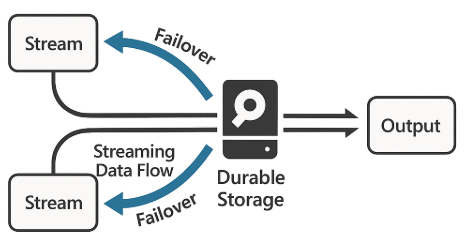
You should also design for failover and recovery. Every major component — such as an Eventstream, KQL Database, or downstream output — should be capable of restarting and catching up automatically after an interruption. This might involve using checkpoints or replay mechanisms to resume from the last known offset rather than losing messages.
Another key concept is message durability. Event brokers like Kafka, Azure Event Hubs, or Service Bus can be configured to persist events to durable storage. This ensures that even if a consumer or service crashes, the events can be replayed later. The level of durability affects performance and cost, so it’s important to configure it appropriately for your reliability requirements.
Ongoing monitoring is also part of resilience. Two key indicators are lag — how far behind the consumers are from the producers — and throughput, which measures how quickly events are processed. Tracking these metrics helps detect performance degradation early, before it escalates into downtime.
Designing for reliability means expecting failure and planning how the system will recover. Resilient real-time architectures rely on redundancy, durability, and visibility to ensure that even when something breaks, the data keeps flowing and the system recovers gracefully.
Learn more about Fabric RTI
If you really want to learn about RTI right now, we have an online on-demand course that you can enrol in, right now. You’ll find it at Mastering Microsoft Fabric Real-Time Intelligence
2026-08-07