
Azure-Sql-Db

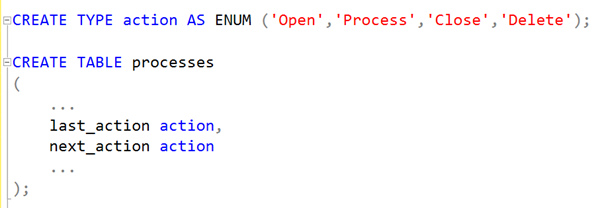
SQL: The need for enumerations in T-SQL

SQL: The need for enumerations in T-SQL

I recently wrote about the need for T-SQL to have constants. I received a lot of feedback on that.

Everyone seemed to agree, although one or two asked Why bother as Microsoft isn’t really listening now about enhancing T-SQL?. I understand that sentiment but I don’t think things are quite as bleak as some are suggesting. I currently sense a stirring within the product group, where there is a new interest in developers.

2025-08-18

SQL Interview: 71 Potential issues with NOLOCK

SQL Interview: 71 Potential issues with NOLOCK

This is a post in the SQL Interview series. These aren’t trick or gotcha questions, they’re just questions designed to scope out a candidate’s knowledge around SQL Server and Azure SQL Database.

Section: Administration Level: Advanced

Question:

You have applications that make extensive use of NOLOCK hints. You have heard that this can cause issues.

Which of the following issues could occur as a result of using NOLOCK hints?

  • Duplicate rows
  • Phantom rows
  • Missing rows

Answer:

2025-08-16

SQL: The need for constants in T-SQL

SQL: The need for constants in T-SQL

If you look at the code in the image above, I have one immediate reaction.

What are those numbers that are sprinkled throughout the code?

I see this all the time in T-SQL code. Yet in any programming language, it’s a really poor idea to do this. It leads to very fragile code that’s so hard to maintain longer-term.

So why do people do it?

So, you might wonder why people do this in T-SQL. Couldn’t they just do this at the start of the code?

2025-08-14

SQL Interview: 70 Updating statistics during index rebuilds

SQL Interview: 70 Updating statistics during index rebuilds

This is a post in the SQL Interview series. These aren’t trick or gotcha questions, they’re just questions designed to scope out a candidate’s knowledge around SQL Server and Azure SQL Database.

Section: Administration Level: Advanced

Question:

When you rebuild indexes, are statistics on the table automatically rebuilt?

If not, why?

Answer:

Rebuilding indexes updates the statistics for the index, but column statistics are not updated unless they are tied to the index.

2025-08-12

SQL Interview: 69 When tempdb gets used

SQL Interview: 69 When tempdb gets used

This is a post in the SQL Interview series. These aren’t trick or gotcha questions, they’re just questions designed to scope out a candidate’s knowledge around SQL Server and Azure SQL Database.

Section: Administration Level: Medium

Question:

You are monitoring a SQL Server and you notice that tempdb is being heavily accessed. You know that your applications make very little use of temporary tables.

Can you give examples of other things that might be using tempdb.

2025-08-08

SQL Interview: 68 Converting to local time zones

SQL Interview: 68 Converting to local time zones

This is a post in the SQL Interview series. These aren’t trick or gotcha questions, they’re just questions designed to scope out a candidate’s knowledge around SQL Server and Azure SQL Database.

Section: Development Level: Medium

Question:

You are working with an Azure SQL Database. When you display dates and times, you notice that they do not match your local time zone of CEST.

Can you change the server settings to Central European Standard Time (CEST)?

2025-08-04

SQL: There is no default output order for SQL queries

SQL: There is no default output order for SQL queries

There is a really common misconception about output order for T-SQL queries. I can’t tell you how often I’ve heard people say that if you don’t specify an ORDER BY clause, then you’ll see the rows returned in the order of the primary key.

The assumption they’re also making is that the primary key is the clustering key. And that’s not necessarily true either. You can have a non-clustered primary key on a table.

2025-08-02

SQL Interview: 66 Using FORCE ORDER

SQL Interview: 66 Using FORCE ORDER

This is a post in the SQL Interview series. These aren’t trick or gotcha questions, they’re just questions designed to scope out a candidate’s knowledge around SQL Server and Azure SQL Database.

Section: Development Level: Medium

Question:

You are reviewing T-SQL code and in one query, you find the following:

OPTION (FORCE ORDER)

What is the point of this code, and is it likely to be helpful?

Answer:

FORCE ORDER tells SQL Server to join the tables that are involved in a query, in the order that they are written in the query.

2025-07-27

SQL Interview: 65 Auditing user actions in T-SQL

SQL Interview: 65 Auditing user actions in T-SQL

This is a post in the SQL Interview series. These aren’t trick or gotcha questions, they’re just questions designed to scope out a candidate’s knowledge around SQL Server and Azure SQL Database.

Section: Security Level: Medium

Question:

You have code in stored procedures that records which users have called the procedures. The stored procedures are defined as:

WITH EXECUTE AS OWNER

You find that when you log the caller of the procedure, you get the owner of the procedure, rather than the caller.

2025-07-23

SQL Interview: 64 Disabling and reenabling constraints

SQL Interview: 64 Disabling and reenabling constraints

This is a post in the SQL Interview series. These aren’t trick or gotcha questions, they’re just questions designed to scope out a candidate’s knowledge around SQL Server and Azure SQL Database.

Section: Administration Level: Medium

Question:

You have a table called Sales.Transactions that has an associated foreign key constraint. The constraint checks that CustomerID values correctly reference the CustomerID primary key of the Sales.Customers table.

You need to bulk load some transaction data and decide to disable the constraint during the load, hoping it will increase performance of the load.

2025-07-19