
Fabric RTI 101: Integrating with Spark Structured Streaming
Spark Structured Streaming is part of Apache Spark’s ecosystem and is designed for continuous processing of data streams using a micro-batch model. Unlike true event-by-event streaming engines, Spark processes data in very small, frequent batches - giving it a balance between throughput and fault tolerance.
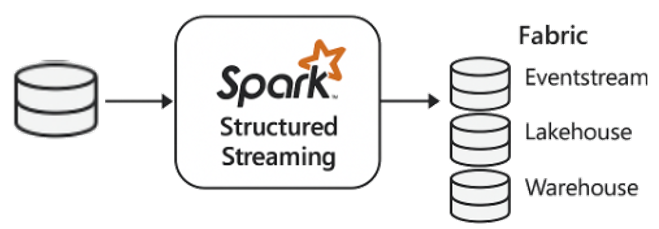
This approach makes Spark Structured Streaming especially effective for large-scale ETL and data transformation workloads. It can ingest data from a variety of real-time sources, perform complex operations such as joins, windowed aggregations, or enrichment, and then write the results to multiple destinations.
One of Spark’s strengths is its ability to maintain stateful computations, meaning it can track information over time - for example, calculating running averages, identifying trends, or comparing new data to historical context.
Because Spark is already widely used in big data pipelines, it fits naturally into enterprise architectures where both batch and streaming processing are required. It also integrates well with Delta Lake and Parquet formats, which makes it straightforward to move between real-time and batch layers.
In a Fabric environment, Spark can serve as an upstream transformation or enrichment layer. Its output - such as a table or stream - can be ingested into Fabric Eventstream, Lakehouse, or Warehouse for real-time reporting, visualization, or further analytics.
Spark Structured Streaming complements Fabric’s capabilities by handling the heavy-lift transformations, while Fabric focuses on interactive analytics, dashboards, and monitoring.
Learn more about Fabric RTI
If you really want to learn about RTI right now, we have an online on-demand course that you can enrol in, right now. You’ll find it at Mastering Microsoft Fabric Real-Time Intelligence
2026-10-14