
Fabric RTI 101: Governance and Compliance

Governance and compliance are critical considerations in real-time systems — they apply every bit as much as they do in traditional batch workloads. The difference is that in streaming environments, everything happens continuously, so your controls and monitoring must operate in real time as well.
The first step is to track data lineage — understanding where each event originated, how it was transformed, and what downstream systems or actions it affected. Lineage visibility helps you answer questions like Where did this number come from? or Which events led to this automated decision? It also supports root cause analysis when problems occur.
Next, ensure that all actions triggered from events are properly audited. When a real-time pipeline automatically takes an action — such as sending a notification, updating a database, or executing a workflow — those activities should be logged.
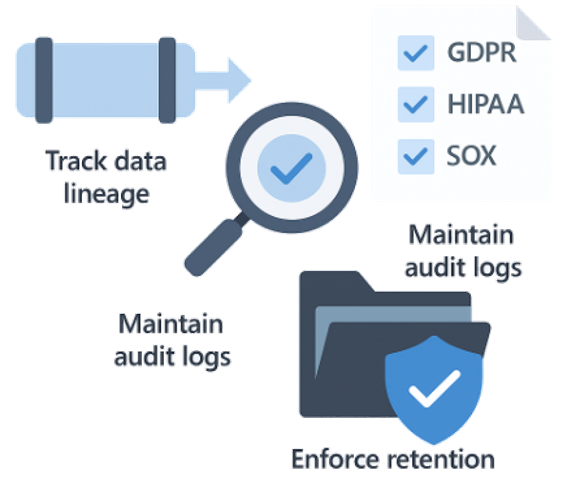
Audit trails are vital for both operational transparency and regulatory oversight. You should also apply compliance rules that match your organization’s or region’s regulatory obligations. Examples include GDPR for data privacy, HIPAA for healthcare data, and SOX for financial accountability. These frameworks may require you to manage where data is stored, how long it’s kept, and who can access it.
Related to that, make sure retention and deletion policies are enforced automatically. Streaming data can accumulate quickly, so your pipelines should include rules to archive or delete data according to retention limits. This not only supports compliance but also keeps costs and storage use under control.
Finally, implement tools that monitor for sensitive data in streams. That includes personally identifiable information (PII), financial details, or health data that may need masking or restricted handling. By flagging sensitive content early, you reduce the risk of data leaks or noncompliance.
Governance and compliance in real-time systems mean traceability, accountability, and protection — ensuring that every piece of data and every automated action can be understood, justified, and managed within regulatory boundaries.
Learn more about Fabric RTI
If you really want to learn about RTI right now, we have an online on-demand course that you can enrol in, right now. You’ll find it at Mastering Microsoft Fabric Real-Time Intelligence
2026-08-19