
Fabric RTI 101: Data Retention Strategies
Streaming systems produce large and continuous data flows, so it’s essential to have a clear data retention strategy. Without one, storage costs and data management complexity can increase very quickly.
The first decision is what type of data to keep. In many cases, raw event data is valuable for troubleshooting or forensic analysis but may not need to be retained indefinitely. Aggregated or summarized data (for example, hourly or daily averages) is often sufficient for long-term trend analysis.
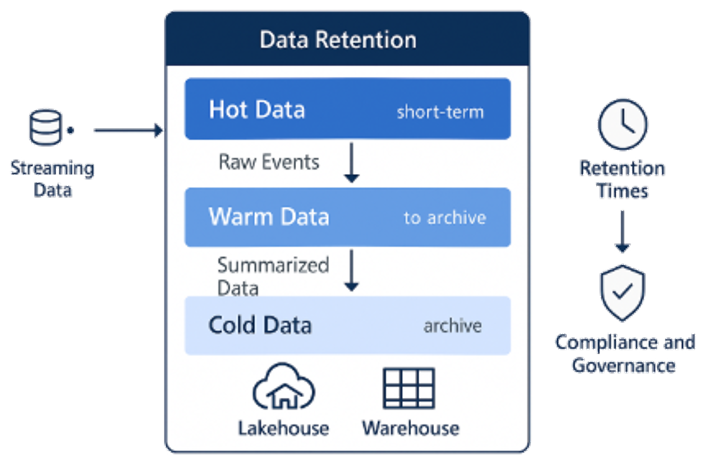
Next, it’s important to distinguish between hot data and cold data.
- Hot data is actively queried and used for operational dashboards or near real-time analytics. It’s stored in fast-access systems like KQL databases and typically retained for shorter periods — perhaps days or weeks.
- Cold data is older information that is infrequently accessed but still important for historical analysis or compliance. This can be archived in Lakehouses or Warehouses, where it remains available for deeper analysis using batch queries or machine learning.
Fabric supports both layers within OneLake, allowing seamless movement of data between hot and cold tiers as retention policies dictate.
Finally, governance and compliance considerations play a major role. Regulations such as GDPR or industry-specific standards may define how long certain data types can be kept and when they must be deleted or anonymized.
The overall goal is to retain enough data to preserve analytical value (for example, to understand long-term patterns) while minimizing unnecessary storage costs and maintaining regulatory compliance.
Learn more about Fabric RTI
If you really want to learn about RTI right now, we have an online on-demand course that you can enrol in, right now. You’ll find it at Mastering Microsoft Fabric Real-Time Intelligence
2026-09-06