
Fabric RTI 101: Streaming to Lakehouses
One of the most powerful features of Microsoft Fabric is the ability to stream data directly into a Lakehouse.
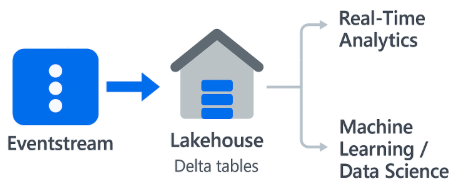
A Lakehouse is a unified storage system that brings together both structured and unstructured data. It can store raw files, like CSV or Parquet, as well as structured tables in Delta format. That means it’s equally comfortable handling real-time events and batch-loaded historical data.
When we connect Eventstreams to a Lakehouse, the incoming data is written directly into Delta tables. This format supports transactional consistency, so you can query the data immediately while new events continue to arrive.
The big advantage here is that you don’t have to separate hot streaming data from cold historical data anymore — both live side by side in the same Lakehouse.
You can perform real-time analytics on recent events and deep analysis across months or years of history, all from a single dataset.
This architecture also forms a natural bridge to data science and machine learning. Because the Lakehouse stores data in open formats, your data engineers and data scientists can use tools like Fabric Notebooks, Spark, or MLflow directly against the same tables used by your real-time pipelines.
In other words, you can move seamlessly from streaming ingestion to predictive analytics — all without duplicating or exporting data.
This combination of real-time ingestion, historical retention, and open access is what makes Lakehouses such a powerful destination for modern streaming workloads.
Learn more about Fabric RTI
If you really want to learn about RTI right now, we have an online on-demand course that you can enrol in, right now. You’ll find it at Mastering Microsoft Fabric Real-Time Intelligence
2026-06-30