
Fabric RTI 101: Querying using SQL
One of the really practical features of KQL databases in Microsoft Fabric is that they don’t lock you into a single query language. While KQL, or Kusto Query Language, is the native language of these databases, you can also query them using standard SQL syntax, including T-SQL style statements that most data professionals are already comfortable with.
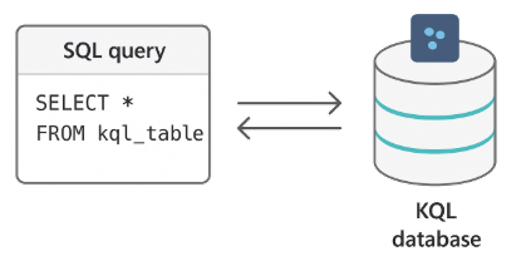
This is an important bridge for teams coming from a relational database background. If you’ve spent years working with SQL Server, Azure SQL, or even PostgreSQL, the idea of learning an entirely new language just to access telemetry or event data can feel like a hurdle.
Fabric smooths that transition by letting you start with the SQL constructs you already know — things like SELECT, WHERE, GROUP BY, and JOIN. You can use those to explore data in a KQL database immediately, without needing to learn KQL syntax from day one.
For example, you could write a simple SQL query to count the number of log entries by severity level, or to join two event tables together on a timestamp or device ID. From the engine’s perspective, Fabric takes that SQL and translates it internally into equivalent KQL operations. The result is that you can query streaming or time-series data in a familiar way, but with the scalability and performance of the KQL engine underneath.
Of course, there are some limitations. SQL queries don’t expose the full power of KQL. You won’t have access to advanced time-series operators like make-series, some special join types, or specialized analytics for anomaly detection and pattern matching. So SQL is best for basic querying and summarization, whereas KQL is designed for deep analytical and time-based exploration.
But for many teams, SQL support provides a gentle, low-risk starting point — they can get real value from the data while learning KQL progressively.
This feature also helps with integration and compatibility. Many BI and analytics tools, such as Power BI or even simple ODBC connections, speak SQL natively. Being able to expose KQL data to those tools using SQL syntax simplifies connectivity and shortens the path from ingestion to visualization.
- KQL databases can be queried using standard SQL syntax.
- It’s ideal for users who are fluent in SQL but new to KQL.
- It supports the main relational constructs — SELECT, WHERE, GROUP BY, and JOIN.
- It’s not as feature-rich as native KQL, but it’s an excellent entry point and compatibility layer for teams moving into real-time analytics in Fabric.
Learn more about Fabric RTI
If you really want to learn about RTI right now, we have an online on-demand course that you can enrol in, right now. You’ll find it at Mastering Microsoft Fabric Real-Time Intelligence
2026-05-19