Business-Intelligence

Opinion: Don't Play Hide and Seek with T-SQL

Opinion: Don't Play Hide and Seek with T-SQL

I spend most of my life in a variety of customer sites. Most of these nowadays tend to be large financial organizations. When I talk to developers in those organizations, and ask them about how they interact with their DBAs, I can’t tell you how often I hear that they try to avoid ever making schema changes, etc. as it takes too long and the process is painful.

When I talk to the DBAs at the same organizations, and I ask them why they resist making schema changes, I hear this:

2017-10-27

CTP for Power View and SSAS Multidimensional Cubes

CTP for Power View and SSAS Multidimensional Cubes

When Power View appeared, one of the big outcries was “but what about connecting to existing cubes!”.

Great to see that the SQL Server team have addressed that. A tool that allows connecting Power View to SSAS Multidimensional cubes is now available.

(NOTE: CTP no longer available)

Help the team get this out the door by trying it and providing feedback.

2012-11-30

SSIS: The package failed to load due to error 0xC0010014

SSIS: The package failed to load due to error 0xC0010014

Over the years, I’ve seen several causes of this error in SQL Server Integration Services but today I came across another one.

You can get this error if you’ve used 3rd party components (particularly data sources) and the licensing for those components has expired.

Hope that helps someone sometime.

2011-12-13

Denali: Note the small but important things in SSIS

Denali: Note the small but important things in SSIS

With SQL Server, there often seems to be an over-emphasis on the items that provide bullet points for the marketing brochure. Yet, small but useful changes to the product can make a more profound impact on DBAs/developers than the new items that are highlighted by those bullet points.

One of the things I loved about Reporting Services in SQL Server 2008 R2 is the amount of focus they provided on ease of use. In particular, the addition of data bars, lookup functions, pagination control, rendering targets in expressions, domain scope, etc. made a huge difference to anyone that really needs to build reports.

2011-09-11

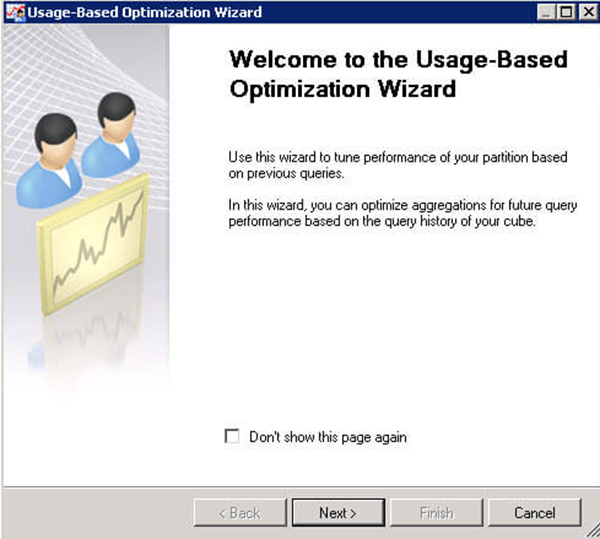
Analysis Services - Usage Based Optimization - Unhelpful UI

Analysis Services - Usage Based Optimization - Unhelpful UI

When using the Usage Based Optimization wizard (or the Aggregation Design Wizard), on the screen that asks you to enter counts. There is a button that says “Count” but after using it, you might still be confronted by the message ““Estimated Count or Partition Count must be specified for cube objects that require counting”. It’s not overly helpful, given you have just asked it to count them itself.

If you see this, look through the list of dimensions and find any that have red squiggles under them. Then open each and find the attributes that also have squiggles and update those counts. Make sure that all squiggles disappear.

2011-07-06

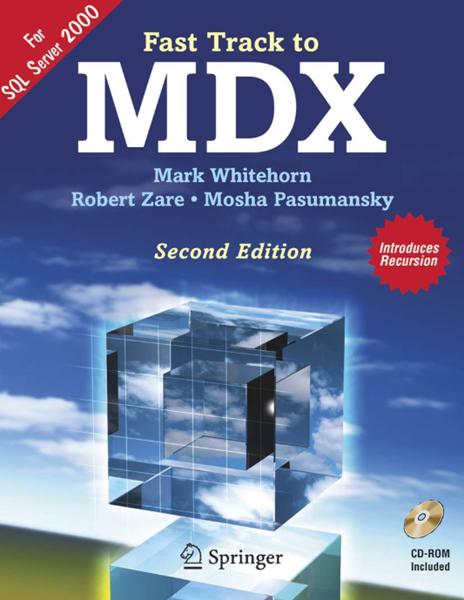
Book Review: Fast Track to MDX

Book Review: Fast Track to MDX

Another book that I re-read while travelling last week was Fast Track to MDX. I still think that it’s the best book that I’ve seen for introducing the core concepts of MDX. My colleague Mark Whitehorn, along with Mosha Pasumansky and Robert Zare do an amazing job of building MDX knowledge throughout the book.

I had dinner with Mark in London a few years back and I was pestering him to update this book. The biggest limitation of the book is that it was written for SQL Server 2000 Analysis Services, yet it still provides an excellent introduction to MDX. The knowledge from the three authors and Mark’s entertaining writing style make this still a “must-have” book for anyone learning MDX.

2011-06-21

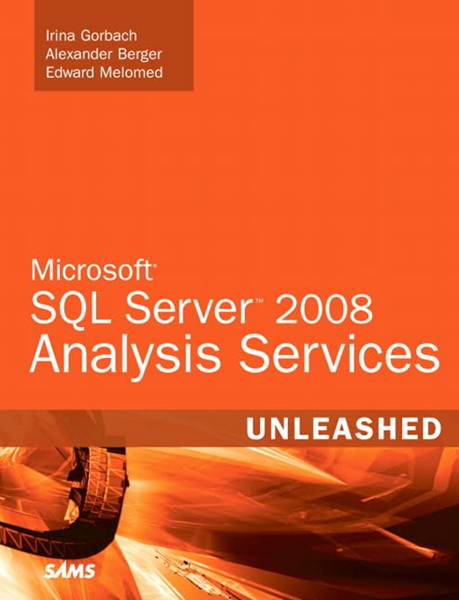
Book Review: Microsoft SQL Server 2008 Analysis Services Unleashed

Book Review: Microsoft SQL Server 2008 Analysis Services Unleashed

Yet another book that I started re-reading last week (but haven’t finished again yet as it’s so large) is Microsoft SQL Server 2008 Analysis Services Unleashed by Irina Gorbach, Alexander Berger and Edward Melomed.

This book has always left me with mixed feelings. The authors clearly offer expert level knowledge on the topics (as they were part of the development team for the product) but I struggle with the “readability” of this book. As an example, each time a concept is introduced, it is done so with accompanying XMLA code snippets, etc.I suspect that a lot of readers would be put off by the XMLA. Most people just don’t think in XMLA.

2011-06-21

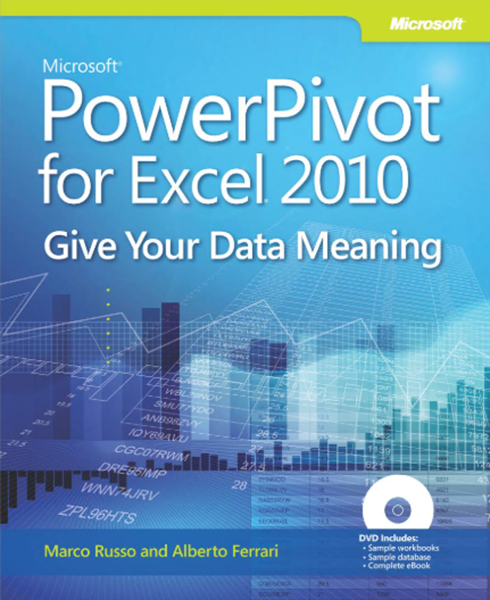
Book Review: Microsoft PowerPivot for Excel 2010: Give Your Data Meaning

Book Review: Microsoft PowerPivot for Excel 2010: Give Your Data Meaning

I’m loving my Kindle. I seem to be getting through books so much faster. One book that I recently read was Book Review: Microsoft PowerPivot for Excel 2010: Give Your Data Meaning by Marco Russo and Alberto Ferrari.

I really liked this book. It provided quite good coverage of PowerPivot use in Excel 2010 and also spent some time mapping the use of PowerPivot to organizational requirements. Marco and Alberto provided more coverage of DAX (Data Analysis Expressions) than I have seen anywhere else, particularly in relation to the CALCULATE verb.

2011-06-01

BI: Databases and Table Prefixes

BI: Databases and Table Prefixes

I know this post has the potential for religious-level debate but it’s time to make it anyway.

The more I’ve been working with Analysis Services lately, the more it grates on me that the BI community still seem to be the last ones hanging onto table prefixes. They’re not doing “tblSomeTable” but they are using “dim”, “fact”, etc.

Hasn’t the time for this long gone now?

Most of the argument seems to be about finding tables in a list of tables. You could do that via schemas if you really wanted to. But as Adam Machanic pointed out recently, from 2005 onwards many-to-many dimensions blur these lines anyway.

2008-06-16