
Fabric RTI 101: AI-Powered Anomaly Detection

This new capability in Microsoft Fabric Real-Time Intelligence brings true AI-driven anomaly detection into the streaming environment. Traditionally, anomaly detection required a fair amount of data-science work - building models, testing parameters, and maintaining code. Fabric now handles much of that automatically.
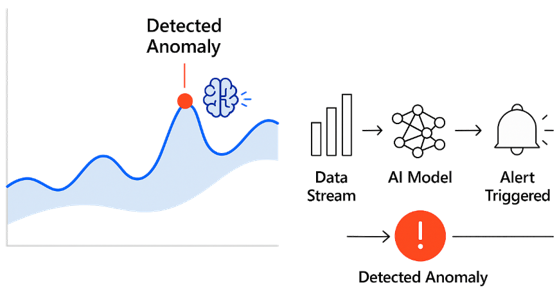
The service examines incoming time-series or streaming data to look for unusual patterns - things that differ significantly from what’s been observed before. It supports both univariate detection, where you track a single metric such as temperature, latency, or transaction volume, and multivariate detection, which handles correlated signals - for example, temperature, pressure, and vibration from the same machine.
You configure which column represents the numeric value you want to monitor, the timestamp field, and any grouping dimension such as device ID or region. Behind the scenes, Fabric tests multiple statistical and machine-learning models, selecting the one that best fits your data’s behavior and variability.
Detected anomalies are presented visually, showing where actual values deviate from expected baselines. You can fine-tune the sensitivity - higher sensitivity will detect subtle deviations but may increase false positives, while lower sensitivity focuses on major shifts.
Once configured, the detector can emit anomaly events in real time.
Those events appear in the Real-Time Hub, where they can trigger alerts or actions through Power BI, Activator, or Power Automate. So this feature moves from simply observing data to acting on it as patterns emerge.
Learn more about Fabric RTI
If you really want to learn about RTI right now, we have an online on-demand course that you can enrol in, right now. You’ll find it at Mastering Microsoft Fabric Real-Time Intelligence
2026-09-24