
Fabric RTI 101: Real-Time APIs and Operational Integration
Dashboards are an effective way to visualize data, but not every use case involves a person watching a screen.
In many organizations, the most valuable insights come when real-time intelligence is embedded directly into operational systems.
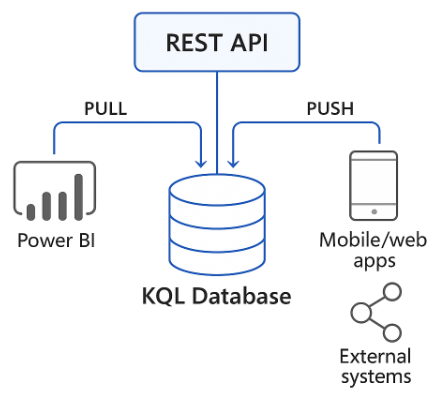
Microsoft Fabric makes this possible by allowing you to expose query results as APIs — typically REST endpoints built on top of KQL Databases. This means that the same data you’re using in dashboards can also be made available to web or mobile applications, business workflows, or partner integrations.
These APIs can support two main interaction patterns:
Pull model: external applications call the API when they need data — for example, a web app that requests the current sensor status or event count.
Push model: the system sends data or alerts automatically when certain conditions are met — for example, pushing updates to a monitoring dashboard or triggering a webhook when an anomaly is detected.
Both approaches are useful, depending on the type of application. The pull model works well for on-demand queries, while the push model is better suited for continuous updates or alerting.
Exposing real-time data through APIs extends Fabric’s capabilities beyond business intelligence. Instead of limiting insights to dashboards or reports, real-time analytics can directly inform operational decisions, automate responses, or power customer-facing applications.
For example, a logistics platform could use a REST API backed by a KQL Database to surface live delivery data in a mobile app, or a fraud detection system might push alerts into a transaction processing service.
This kind of integration helps ensure that real-time intelligence doesn’t just stay in analytics tools — it becomes part of everyday operations, where it can have an immediate impact.
Learn more about Fabric RTI
If you really want to learn about RTI right now, we have an online on-demand course that you can enrol in, right now. You’ll find it at Mastering Microsoft Fabric Real-Time Intelligence
2026-07-12