
Fabric RTI 101: Fabric Storage Options - KQL Databases
KQL databases are a specialized storage option in Fabric designed specifically for high-volume event and telemetry data. KQL stands for Kusto Query Language, which comes from the Azure Data Explorer (ADX) engine.
These databases are optimized to handle workloads where you might have billions of small events — like application logs, IoT telemetry, or time-series data — and you need to query them at speed.
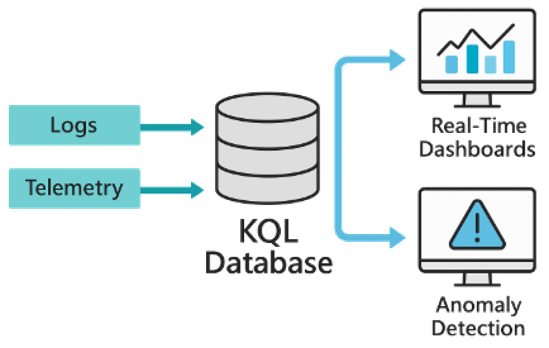
Where a warehouse is optimized for structured, relational data and a lakehouse is great for mixing structured and semi-structured data, a KQL database shines when you need to scan and aggregate across massive volumes of events very quickly. You can run queries that look back over millions of log entries or thousands of IoT readings and get sub-second responses. That kind of responsiveness is what makes it possible to power real-time dashboards, alerting systems, and anomaly detection workflows.
KQL as a language is particularly good for this. It’s designed for time-series exploration, fast filtering, and pattern recognition. For example, you can very easily write queries that show error counts per minute, detect spikes or drops, or find unusual patterns in telemetry streams. That makes it a natural fit for operational intelligence use cases — things like monitoring service health, tracking application performance, or watching for security anomalies.
It’s important to note that KQL databases don’t replace warehouses or lakehouses — they complement them. Think of it as having the right tool for the job. If you need strict relational consistency and structured schemas, a warehouse is still the best choice. If you need to combine files, tables, and data science workloads, a lakehouse is the right fit. But if you need lightning-fast exploration over billions of logs or time-series events, that’s when you reach for a KQL database.
KQL databases are the event specialists in the Fabric storage ecosystem. They’re built to keep pace with streaming and telemetry workloads, and they give you the speed you need to power real-time insights.
Learn more about Fabric RTI
If you really want to learn about RTI right now, we have an online on-demand course that you can enrol in, right now. You’ll find it at Mastering Microsoft Fabric Real-Time Intelligence
2026-05-01