
Devops

SQL: Backup SQL Server Databases to Nowhere Immediately After Creation (suggestion)

SQL: Backup SQL Server Databases to Nowhere Immediately After Creation (suggestion)

Most companies have some sort of ongoing maintenance processes that perform periodic backups of databases. They also have log backups scheduled for any databases that are online and in full recovery model. However, when you first create a database, it might be in full recovery model yet never have had a full backup performed. If your scheduled jobs then try to create a log backup prior to the first full backup, the backup will fail, and that might make your job fail.

2018-09-03

DevOps: Thoughts on Microsoft's Acquisition of Github

DevOps: Thoughts on Microsoft's Acquisition of Github

I have many friends who would have checked the calendar when they first heard that Microsoft was buying Github. They would have guessed it was April 1st.

I think it’s another pretty bold strategic move by Satya Nadella.

It’s been interesting to see all the naysayers coming out of the woodwork to beat up on the idea of Microsoft owning Github, as though it was going to be the death of Github. Almost every single time I hear a justification though, it is based on their opinion of Microsoft or something they did often decades ago.

2018-06-15

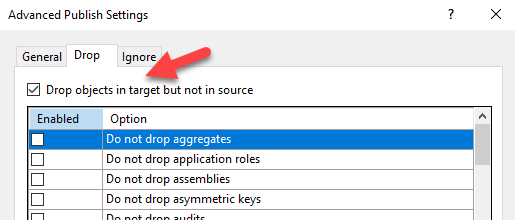
DevOps: Deleting stored procedures and views in target database when using database projects

DevOps: Deleting stored procedures and views in target database when using database projects

We’ve been using SQL Server database projects ever since they were called “Visual Studio Team Edition for Database Professionals”. That was back in 2005 and the name was quite a mouthful.

Until the last year or so though, we’ve only seen fairly patchy adoption of them among our customers. Over the last year or so, this has really changed. We’re seeing so many customers starting to use them. Why?

I’m guessing that it’s the increased interest in using DevOps.

2018-06-01

DevOps: Human testing is still critical - and make sure they can spell

DevOps: Human testing is still critical - and make sure they can spell

I’ve spent a lot of time lately working with automated testing systems.

Unit tests are great for checking blocks of code, etc. but integration tests and functionality tests are critical to projects. An area that is still tricky though is UI testing. There are some really good tools for this.

Selenium has been very popular and works well if you access it programmatically. There are good framework libraries for .NET and we’ve been using those. Selenium also had a pretty good IDE that could be used for recording but it’s pretty much adrift now as it was based on an older version of Firefox and doesn’t work on the latest versions. You could install it on an older version for testing but those versions aren’t safe to use so the recommendation is to avoid it. Working with it programmatically is not that hard though.

2018-03-30

DevOps: Keep moving forward not backwards when deploying to production

DevOps: Keep moving forward not backwards when deploying to production

I was asked a curious question the other day: “Are all changes made to production systems actually deployments?”

I wish the answer was yes, but unfortunately patches do get applied directly to production systems without going through standard deployment processes.

Everyone understands the scenario. Code has been deployed using the normal processes, then someone has something that simply must be fixed urgently in the productions systems. At that point, you have two choices:

2018-03-23

DevOps: SQL Server and Unit Test Challenges

DevOps: SQL Server and Unit Test Challenges

I had a previous life as a developer and ran a software-development house. Even then, I was very focussed on data. I don’t think I’ve ever had a BD (before data) period. I see almost everything I’ve ever worked on in data-related terms, so perhaps it’s the time before I focussed on data.

But what this does mean is that whenever I get together with other data-related people, I’m one of the people who is asking why things that are taken for granted in the developer community, aren’t present in SQL Server and its T-SQL language.

2018-03-16

DevOps: Avoiding SQL Server Clone databases growing way too large

DevOps: Avoiding SQL Server Clone databases growing way too large

I’ve recently been making use of SQL Clone from Redgate, at various client sites. I have to say that I really like it.

The basic concept is that you take an existing SQL Server database, you create an “image” from it, then you create database clones from that image.

Under the covers, it’s basically a differencing technology. The initial image is like an initial set of database files, and each clone is then files that are differenced from that. That makes it very easy to spin up clones, and to break them down again. While this isn’t really suitable for much in the way of performance or load testing, as everyone is sharing the same base, it’s perfect for general development.

2018-03-09

DevOps: Should migration-based deployments use idempotent scripts?

DevOps: Should migration-based deployments use idempotent scripts?

In my last DevOps-related post, I discussed some of the issues that arise when using migration-based deployments.

Migration-based deployments are based on a series of T-SQL scripts that apply changes to your database from its current state to a desired final state.

One of the questions that arises though, is whether or not these T-SQL scripts should be idempotent ie:

Should the script be written so that you get the same outcome if you run the scripts multiple times?

2018-03-02

DevOps: Dealing with issues in migration-based deployment of databases

DevOps: Dealing with issues in migration-based deployment of databases

In an earlier post, I described the difference between state-based deployments and migration-based deployments. What I want to talk about today are two of the main issues that can arise in a migration-based deployment and what to do about one of them.

When you are using a migration-based deployment technique, you are storing all the scripts that take a database from its current state to the desired final state. While tools like Ready Roll make this is a relatively easy way to perform migrations, it suffers from a few key problems:

2018-02-23

DevOps: Declarative is where we want to be

DevOps: Declarative is where we want to be

If you have ever tried to write scripts to configure operating systems, you’d realize just how hard that is to get correct.

For example, if you need to ensure that your virtual machine has two network adapters, and they need to have a specific set of IP addresses, how do you do that?

Image by Markus Spiske

The traditional approach for PowerShell (and similar tools) was to try to write a step-by-step script to configure the network adapters the way you want. But where do you start? Do you write a script to check for any existing adapters and loop through them to try to remove them? Do you try to add the ones you want, and then remove the others?

2018-02-16