
Fabric RTI 101: Integrating with MQTT
MQTT is a lightweight messaging protocol designed for IoT and edge environments.
It uses a publish/subscribe model, making it efficient for devices that send small amounts of data over unreliable or bandwidth-limited connections - such as sensors, embedded devices, or mobile units.
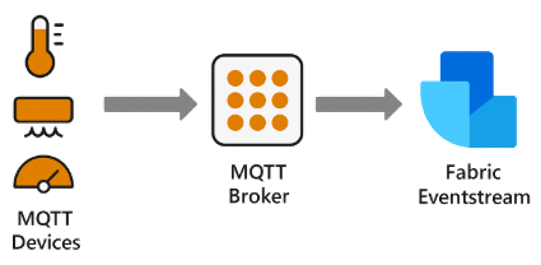
In MQTT, a central broker (like Eclipse Mosquitto, HiveMQ, or EMQX) handles communication between clients. Devices publish messages to topics, and subscribers receive updates for the topics they’re interested in. This model decouples producers and consumers, improving scalability and resilience.
Integration with Microsoft Fabric typically happens through a bridge or connector that forwards MQTT messages into Fabric Eventstream. The connector subscribes to one or more MQTT topics and publishes incoming messages as events to Fabric.
This allows telemetry and sensor data from field devices to be captured and analyzed in real time within Fabric. For example, temperature readings, equipment vibration, or energy usage data can be processed in KQL databases, visualized in Power BI dashboards, and trigger automated alerts through Activator.
MQTT integration is especially valuable for edge analytics scenarios - enabling local filtering or aggregation before data is streamed to Fabric, reducing bandwidth use while keeping the central analytics platform up to date.
Learn more about Fabric RTI
If you really want to learn about RTI right now, we have an online on-demand course that you can enrol in, right now. You’ll find it at Mastering Microsoft Fabric Real-Time Intelligence
2026-10-18