
Fabric RTI 101: Using an Eventhouse as a Vector Database
An Eventhouse-originally designed for realtime event data-can also serve as a vector database in Fabric RTI, supporting semantic/embedding-based retrieval workflows.
The key enabler is the dynamic column type, which allows you to store unstructured data such as arrays or JSON blobs. This lets your embedding vectors live alongside your ordinary event metadata.
Microsoft recommends using Vector16 encoding (i.e. 16-bit floating representation) rather than full 64-bit. This dramatically reduces storage footprint and boosts the performance of vector operations like dot product or cosine similarity.
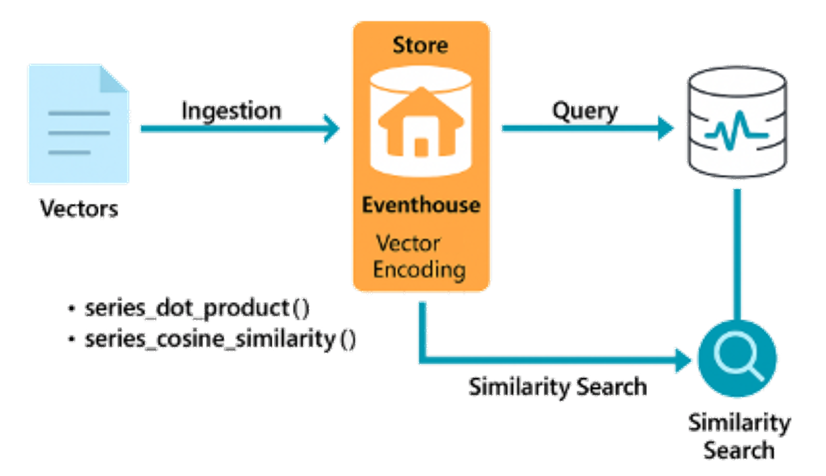
Once embeddings are stored, you can use native KQL functions like series_dot_product() or series_cosine_similarity() to compute similarity between vectors at query time. That gives you vector-search or semantic matching capabilities right inside Eventhouse.
To scale, you should set appropriate sharding policy (limiting rows per shard) and merge policy (preventing unwanted merges) so that each cluster node can parallelize searches efficiently.
With this setup, you can support real-time retrieval applications-e.g., feed embedding vectors as part of conversational or semantic systems, do similarity lookups on the latest events, or enrich live queries with context vectors.
This design allows you to collapse what might otherwise require a separate vector database into your existing Eventhouse infrastructure-making your architecture simpler and your search truly real time.
Learn more about Fabric RTI
If you really want to learn about RTI right now, we have an online on-demand course that you can enrol in, right now. You’ll find it at Mastering Microsoft Fabric Real-Time Intelligence
2026-10-08