
Fabric RTI 101: Integrating with Machine Learning
Machine learning plays an increasingly important role in real-time analytics. Instead of only using models in batch workflows, many systems now apply them directly to streaming data - allowing predictions, classifications, or anomaly detection as events occur.
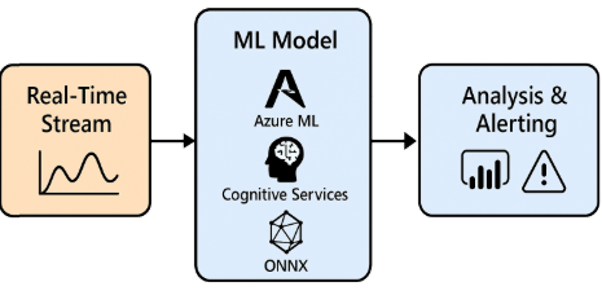
In this model, each incoming event - such as a transaction, sensor reading, or social media post - can be scored in-flight by a machine learning model. For example, a transaction can be classified as potentially fraudulent, an IoT signal can be checked for signs of equipment failure, or a social post can be analyzed for sentiment.
Fabric supports multiple integration approaches. You can call Azure Machine Learning online endpoints or Cognitive Services APIs from KQL queries or from processing pipelines. These services provide managed ways to host and score models using REST endpoints. In other cases, lightweight models can be embedded locally using ONNX for low-latency scoring without leaving the environment.
Combining machine learning outputs with KQL logic often gives the best results. KQL can perform pre-filtering, apply rules, or run anomaly detection to focus the model only on relevant data. This hybrid approach improves both efficiency and interpretability.
Within Fabric’s Real-Time Intelligence (RTI) framework, the streaming layer acts as the last mile for ML deployment - connecting trained models to operational data streams. It enables continuous evaluation of live data, providing actionable insights in production rather than just in experimentation.
Learn more about Fabric RTI
If you really want to learn about RTI right now, we have an online on-demand course that you can enrol in, right now. You’ll find it at Mastering Microsoft Fabric Real-Time Intelligence
2026-09-22