
Fabric RTI 101: Snapshot
A snapshot transformation is about capturing the current state of something from a continuous stream of events. Instead of storing every single historical record, we keep just the most recent update for each entity.
Think of IoT devices as an example. Each device may send a temperature reading every few seconds. Over time, that becomes a huge stream of data. But often, what the business really wants to know is simple: what’s the latest temperature reading from each device right now? That’s where a snapshot comes in. It continuously updates a table of ‘current values’ as new events arrive, so at any given moment, you can query the most recent state without reprocessing the entire history.
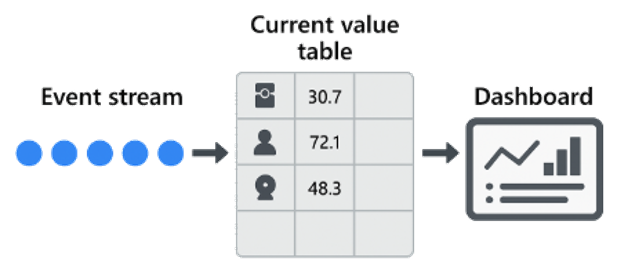
This approach is incredibly useful for stateful monitoring. For instance, in manufacturing, you could snapshot the latest vibration reading for each machine. In retail, you might snapshot the most recent inventory count per store. In finance, you could snapshot the last known balance for each account after each transaction. These snapshots allow real-time dashboards to show ’live’ views of the world.
Of course, snapshots don’t replace historical analysis — you might still want to persist all events into a lakehouse or warehouse for trend analysis. But for operational monitoring, where the question is ‘what’s the current value?’, snapshots provide a lightweight, efficient solution.
Another way to think about it is like a scoreboard in sports. The game itself produces a stream of events — every pass, every shot, every foul. But the scoreboard doesn’t show the entire history. It shows the latest state of the game: the current score. That’s essentially what a snapshot does — it distills the stream into the most recent picture of reality.
Learn more about Fabric RTI
If you really want to learn about RTI right now, we have an online on-demand course that you can enrol in, right now. You’ll find it at Mastering Microsoft Fabric Real-Time Intelligence
2026-04-21