
Fabric RTI 101: Session

A session window works very differently from tumbling or sliding windows. Instead of cutting streams into fixed blocks of time, a session window groups events based on periods of user or device activity. The window continues to collect events as long as there is activity, and it automatically closes after a defined period of inactivity.
For example, imagine a customer browsing an online store. They click through pages, add items to their cart, maybe watch a video. All of that activity within, say, a 10-minute span of clicks would be grouped into one session. If the customer stops interacting for more than 10 minutes, the window closes, and the next click starts a new session.
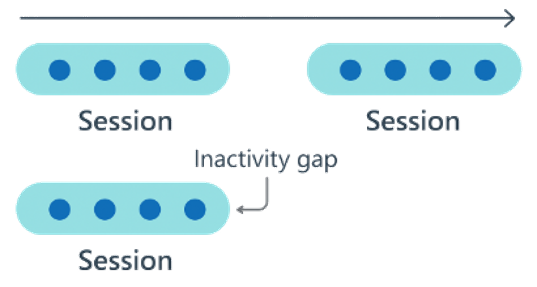
This approach is especially valuable for behavioral analytics. It allows us to measure things like average session length, number of items per session, or conversion rate per session. It’s much closer to how businesses think about customer interactions than fixed five-minute or one-hour blocks.
Session windows aren’t just for web activity. In IoT scenarios, a session could represent a period of machine operation. If a sensor reports values continuously but then goes silent for a while, that pause ends the session. This makes it easy to study machine usage patterns, detect anomalies in active periods, or analyze energy consumption across distinct runs.
The benefit of session windows is that they provide contextual groupings — they capture real-world bursts of activity, rather than forcing everything into rigid time boundaries. That said, they can be more complex to manage because sessions are dynamic, not predictable like tumbling windows.
If tumbling and sliding windows are about the clock, session windows are about behavior. They give us a way to organize and analyze events that naturally cluster around user or device activity.
Learn more about Fabric RTI
If you really want to learn about RTI right now, we have an online on-demand course that you can enrol in, right now. You’ll find it at Mastering Microsoft Fabric Real-Time Intelligence
2026-04-17