The Bit Bucket

Book Review: The Hard Thing About Hard Things

Book Review: The Hard Thing About Hard Things

I recently read The Hard Thing About Hard Things: Building a Business When There Are No Easy Answers by Ben Horowitz. I was interested to read it because Ben is a well-known and experienced entrepreneur, based in the Silicon Valley area south of San Francisco. He offers advice on how to really run startups.

I loved the way that Horowitz addressed failure. Instead of taking the business school approach of telling you how things should be done, and assuming that you’ll do everything correctly, he spends time telling you what to do after you’ve already screwed up.

2019-03-08

Shortcut: Accessing script files and folders in SQL Server Management Studio

Shortcut: Accessing script files and folders in SQL Server Management Studio

This one is a very simple and quick tip.

When working in SQL Server Management Studio (SSMS), I often need to open File Explorer in the folder where the script file is stored. Turns out there is an easy way to do that.

There are two interesting options when you right-click the tab at the top of a query window:

Note that you can open the containing folder for the script. You can also copy the path to the script into the clipboard.

2019-03-07

SDU Tools: Screaming Snake Case and Sponge Bob Snake Case in T-SQL

SDU Tools: Screaming Snake Case and Sponge Bob Snake Case in T-SQL

In our free SDU Tools for developers and DBAs, a number of the string formatting functions have been quite popular, and we keep getting requests for even more.

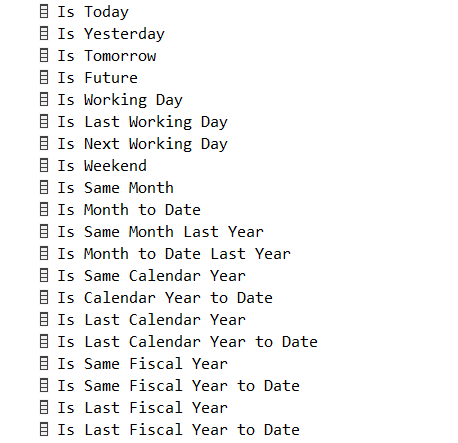
Today’s post highlights two of these. Screaming Snake Case is words in capitals separated by underscores. Sponge Bob Snake Case has underscore separated words (hence the “snake case” part) with alternating capitals. (It’s just for fun).

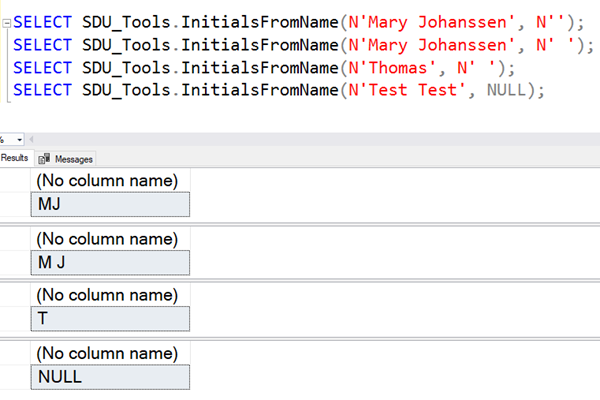
You can see them (and some others) in action in the main image above, and in this video:

2019-03-06

SQL: The Down Side of a Low FILLFACTOR

SQL: The Down Side of a Low FILLFACTOR

When you create or rebuild an index in SQL Server, you can specify a FILLFACTOR value. It determines how full (as a percentage) that SQL Server should try to make the pages.

There is also one special value. Zero says “I haven’t set a value” and it applies the default, which by default, is 100%. Any value from 1 to 100 is the target percentage.

So why do people set lower values for FILLFACTOR? The argument is they know that their inserts are going to happen all over the table (i.e. not just neatly at the end of the table), and they’re trying to avoid page splits. And yes, lots of page splits can be a nasty thing. The most common problem case that people describe is where they’ve used a GUID as a clustering key (usually also a primary key) for a table. Then the inserts happen randomly throughout the table.

2019-03-05

T-SQL 101: 7 How are users different to logins in SQL Server?

T-SQL 101: 7 How are users different to logins in SQL Server?

One concept that often confuses newcomers to SQL Server is the difference between a login and a user.

In an earlier post, I mentioned that being authenticated to a server is what’s called a login. In this example shown, I have a log in here called Malathi. But as I said, this means nothing about what databases Malathi then has access to.

The connection between a login and a database is what the concept of a user is about.

2019-03-04

Book Review: The Little Things: Why You Really Should Sweat the Small Stuff

Book Review: The Little Things: Why You Really Should Sweat the Small Stuff

The title of this book caught my eye. I’m sure it’s intended to be a play on the title of  Don’t Sweat the Small Stuff and it’s all small stuff: Simple Ways to Keep the Little Things From Taking Over Your Life by Richard Carlson. I reviewed that book here.

So this one is The Little Things: Why You Really Should Sweat the Small Stuff by Andy Andrews.

Andrews tends to write small (and short) books that get pretty much to the point. This one also does the same. I saw a large number of people taking about how much they enjoyed it, but for me, it fell flat. In Carlson’s book, there were great messages about how easy it is to have your life overcrowded, particularly with things that in the end really don’t matter.

2019-03-01

Shortcut: Using Quick Launch in SQL Server Management Studio

Shortcut: Using Quick Launch in SQL Server Management Studio

In SQL Server Management Studio (SSMS) for SQL Server 2016, a new search tool called Quick Launch was added. It’s this bar up the top:

Note that there’s another bar underneath it to the left. That’s not the Quick Launch bar. That’s the Find bar.

While the Find bar is useful for searching for text within queries, etc., the Quick Launch bar is useful for searching within SSMS itself.

2019-02-28

SDU Tools: XMLEncodeString and XMLDecodeString in T-SQL

SDU Tools: XMLEncodeString and XMLDecodeString in T-SQL

On occasions, I need to work with XML data in SQL Server T-SQL and one problem is that I need to be able to encode and decode strings, using the XML encoding standards. For example, my strings might include % characters or < or > characters, etc.

So we added a pair of tools (XMLEncodeString and XMLDecodeString) our free SDU Tools for developers and DBAs.

You can see them in action in the main image above, and in this video:

2019-02-27

SQL: Text vs Varchar(max) - in row vs out of row storage

SQL: Text vs Varchar(max) - in row vs out of row storage

There was an interesting discussion on a local mailing list about the performance of a table that was just used for logging. One of the things that intrigued me was that the developer had used the text data type to store his log messages.

Now text, along with ntext and image, was deprecated back in 2005. Instead of text, ntext, and image, you should be using varchar(max), nvarchar(max), and varbinary(max).

2019-02-26

T-SQL 101: 6 What are SQL Server databases?

T-SQL 101: 6 What are SQL Server databases?

You might be wondering what databases are.

A database is just a collection of information. Let’s take a look at an example:

On this system, I have a number of user databases (AdventureWorks, PopkornKraze, and others). There are also some system databases:

These are ones that are provided by SQL server itself, and mostly are used to hold SQL Server’s own configuration.

Now if we look inside any of the databases, we’ll see a list of tables, views, and programmable objects like stored procedures, and functions. Tables are where most of the information lives. In PopkornKraze, you can see the tables that are present:

2019-02-25