
Fabric RTI 101: AI Anomaly Detector - Use Cases

Let’s look at where this feature fits in practice.
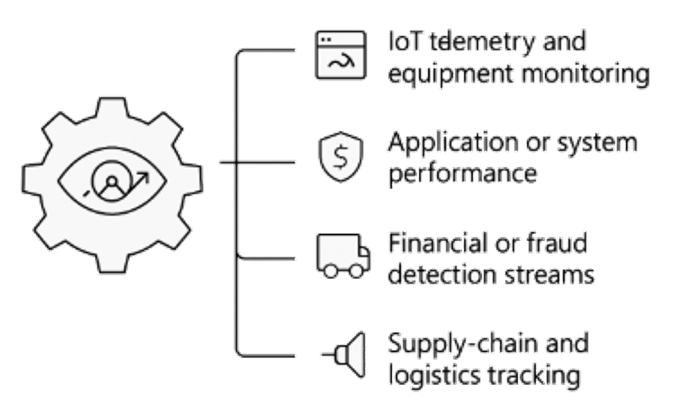
The first major category is IoT telemetry - monitoring physical equipment. Think of a manufacturing plant where each machine sends readings for vibration, current draw, and temperature. Sudden spikes or drifts in these metrics may indicate wear, imbalance, or failure. The anomaly detector can continuously flag these irregularities before they cause downtime.
Another use case is application or system performance. If you’re monitoring throughput, error rates, or latency across multiple services, anomalies may indicate deployment issues, scaling problems, or outages. Because detection runs continuously and in near real time, operations teams can be notified within seconds.
The third common area is financial data - for example, transaction volumes, payment failures, or refund patterns. Detecting anomalies early can prevent fraudulent activity or identify systemic errors in payment flows.
Finally, supply-chain and logistics data is increasingly event-based - shipment scans, location updates, delivery times. Fabric’s detector can spot anomalies such as unexpected delays or missing updates in a route, triggering alerts for intervention.
The key point across all these is that anomalies are often early warning signals. By automating their detection and integrating that into your data fabric, you shorten the time between something going wrong and someone knowing about it.
Learn more about Fabric RTI
If you really want to learn about RTI right now, we have an online on-demand course that you can enrol in, right now. You’ll find it at Mastering Microsoft Fabric Real-Time Intelligence
2026-09-30