
Fabric RTI 101: Common Pitfalls in Real-Time Projects
Many real-time data projects fail not because of the technology, but because of design assumptions and unnecessary complexity.
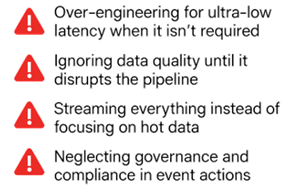
One of the most common mistakes is over-engineering for ultra-low latency. Teams sometimes aim for sub-second response times even when the use case doesn’t require it. That often adds complexity and cost without meaningful benefit. Instead, define what ‘real time’ truly means for your scenario — it might be seconds or even minutes, depending on the business need.
Another frequent issue is ignoring data quality until something breaks. In streaming systems, bad data doesn’t just cause one error — it can pollute entire pipelines. Validate and sanitize data as close to ingestion as possible. Even lightweight checks can prevent downstream corruption or inaccurate analytics.
It’s also easy to stream everything, simply because it’s possible. But continuous streaming comes at a cost — both in compute and maintenance. Focus your real-time workloads on hot data that supports immediate decisions or alerts. Move the rest into batch or near-real-time flows. This hybrid approach keeps systems both efficient and sustainable.
A more subtle pitfall is forgetting governance and compliance when designing event-driven automations. When Activator or a similar service triggers actions automatically, those actions can have real operational or regulatory impact. Every trigger should be auditable and governed under the same standards as any other system of record.
By keeping these pitfalls in mind, you can design real-time pipelines that are fit for purpose — fast enough, accurate enough, and cost-efficient — rather than chasing extremes that add risk without adding value.
Learn more about Fabric RTI
If you really want to learn about RTI right now, we have an online on-demand course that you can enrol in, right now. You’ll find it at Mastering Microsoft Fabric Real-Time Intelligence
2026-08-27