
Fabric RTI 101: When to use KQL or SQL
I’ve mentioned that in Microsoft Fabric, both KQL and SQL are available as query options — and they each have their strengths. So when should we use each?
KQL, or Kusto Query Language, is purpose-built for analyzing logs, telemetry, time-series, and streaming data. It’s optimized for massive volumes of events, and it’s designed to help you spot trends, anomalies, and behaviors over time. If you’re working with sensor readings, application traces, or event streams, KQL is the natural fit.
SQL, on the other hand, excels with structured, relational analytics — the kind of work you might do when querying data warehouses or relational tables. It’s familiar to most data professionals and works beautifully for joins, aggregations, and reporting-style queries.
The great thing is that KQL databases support both languages. You don’t have to choose one forever — you can use whichever fits your background or the problem at hand.
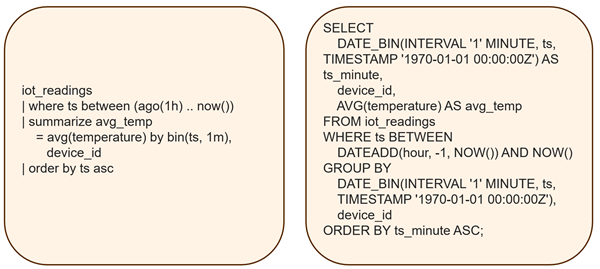
Let’s see a few examples.
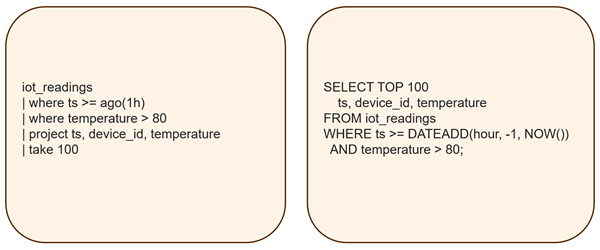
Note: the line wrap shown in KQL was just to make it displayable side-by-side, not for real code.
If your team already knows SQL, start there. It’s accessible and productive right away. Then, as you explore more advanced time-series or streaming analytics, you can move into KQL to take advantage of features like time windows, joins across streams, and pattern matching.
Ultimately, the choice isn’t about one being better — it’s about what’s right for your workload and your team. In practice, many organizations use both: SQL for structured analysis and KQL for live, real-time insights.
Learn more about Fabric RTI
If you really want to learn about RTI right now, we have an online on-demand course that you can enrol in, right now. You’ll find it at Mastering Microsoft Fabric Real-Time Intelligence
2026-05-31