
Fabric RTI 101: What are KQL Querysets?
A KQL queryset in Microsoft Fabric is essentially a container or workspace for related KQL queries. Instead of having dozens of individual queries saved in isolation, a queryset lets you group them in one logical place so they can be organized, reused, and managed more effectively.
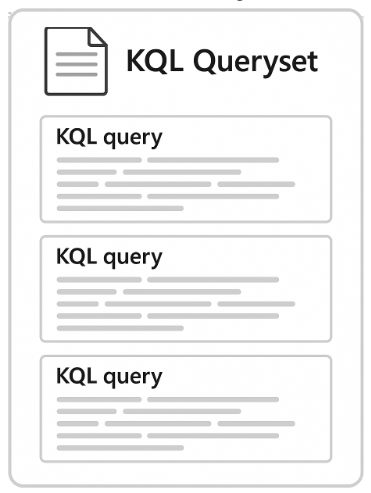
Think of it as a structured collection — you might have a queryset dedicated to application performance monitoring, another for network telemetry, and another for error diagnostics. Each queryset can hold multiple KQL queries, each focused on a specific metric or analysis, but all connected by a common purpose.
Whether your data originates from a live eventstream or from a stored telemetry history, you can execute your queries in the same place. This helps unify real-time and historical analytics — you’re not jumping between tools to view current conditions and past trends.
They’re particularly valuable in operational and monitoring scenarios, where teams rely on a standard library of queries to check system health, watch for anomalies, or troubleshoot incidents. For example, one queryset might include queries that check ingestion rates, latency, or error counts; another might detect sudden changes in event frequency or missing data from sensors. Having these queries organized and accessible in a queryset makes it much easier for teams to respond quickly to issues.
Beyond convenience, querysets also support collaboration and governance. They’re stored and versioned in a controlled way, so you can share them across teams without losing track of changes. Role-based access control ensures that only authorized users can modify or execute certain queries. That’s important in production environments, where analytics need to be consistent and auditable.
Querysets act like the central hub for KQL-based analytics within Fabric. They provide structure and repeatability — rather than writing ad-hoc queries each time you need an answer, you build a curated set of reusable ones. Over time, those sets become a knowledge base for your organization’s data operations.
KQL querysets help organize, reuse, and govern KQL queries. They improve collaboration across teams, make operational analytics more consistent, and bring together real-time and historical insights in one managed environment.
Learn more about Fabric RTI
If you really want to learn about RTI right now, we have an online on-demand course that you can enrol in, right now. You’ll find it at Mastering Microsoft Fabric Real-Time Intelligence
2026-05-15