
Fabric RTI 101: Sliding

A sliding window is a type of temporal window where the windows are of fixed length, but they overlap because they slide forward by a smaller step than their total size. This makes them perfect for producing smooth, continuous metrics like rolling averages.
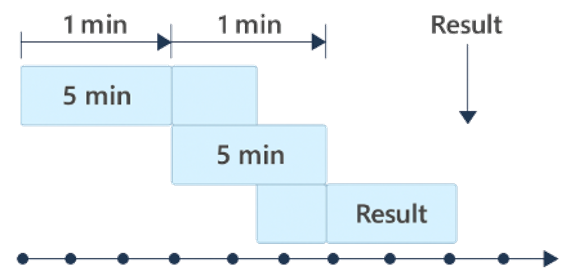
For example, suppose we define a sliding window of five minutes that advances every one minute. That means the system calculates results based on the last five minutes of events, then slides forward by one minute and recalculates. Each window overlaps the previous one, so every result shares a lot of the same data, but with just a bit of new information added.
This approach is especially useful for monitoring gradual trends. Imagine tracking average temperature across IoT sensors. With tumbling windows, you might only see averages every five minutes, which could miss small changes in between. With sliding windows, you get a new result every minute, always based on the last five minutes of data, giving you a rolling, smoothed view of the trend.
Sliding windows are also widely used in finance, for things like rolling stock averages or fraud detection patterns, and in operations, where you want near-real-time KPIs that update continuously without waiting for the next rigid bucket to close.
The trade-off is that sliding windows require more compute, since the same events may be processed multiple times across overlapping windows. But in return, you get a more nuanced, continuous picture of what’s happening in your system.
You can think of sliding windows as a way to generate rolling, overlapping insights, helping us catch slow changes or gradual shifts that might otherwise be hidden in fixed buckets.
Learn more about Fabric RTI
If you really want to learn about RTI right now, we have an online on-demand course that you can enrol in, right now. You’ll find it at Mastering Microsoft Fabric Real-Time Intelligence
2026-04-15