
Fabric RTI 101: Fabric Storage Options - Lakehouses
A lakehouse is a relatively new storage concept, and it’s designed to give you the best of both worlds. On one side, you have a traditional data lake, which is extremely flexible — you can throw files of any shape or size into it, including structured, semi-structured, and unstructured data. On the other side, you have a data warehouse, which adds the structure, schema enforcement, and query performance that analysts are used to.
A lakehouse blends these two ideas together. In Fabric, a lakehouse can store raw files such as Parquet or Delta files, but it also supports tabular structures so you can query data using familiar SQL-style queries. That means data scientists, engineers, and analysts can all work with the same system, without constantly moving data around.
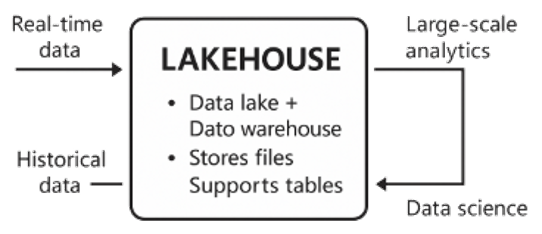
Where a lakehouse really shines is at large scale. If you’re bringing in terabytes of logs, sensor readings, or transaction history, it can easily handle that.
Not just structured data
But it’s not limited to structured data — it’s equally good at storing semi-structured formats like JSON, or even unstructured files like images or text blobs, all in the same place.
For real-time workloads, lakehouses are especially powerful because they can act as a meeting point between streaming and batch data. You can have a stream of events landing in near real time, sitting right alongside years of historical data that arrived in batch form. That makes it much easier to do scenarios like trend analysis, anomaly detection, or machine learning training where you need both the historical context and the fresh events.
Think of a lakehouse as your analytics foundation: it gives you the flexibility of a lake, the structure of a warehouse, and the ability to combine real-time and historical data in one unified environment.
Learn more about Fabric RTI
If you really want to learn about RTI right now, we have an online on-demand course that you can enrol in, right now. You’ll find it at Mastering Microsoft Fabric Real-Time Intelligence
2026-03-02