
Fabric RTI 101: Fabric Storage Options - OneLake
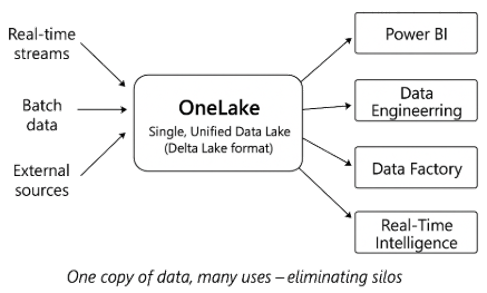
OneLake is really the foundation of Fabric’s storage model. The idea is simple but powerful: instead of having separate storage systems for each analytics tool or service, Fabric provides a single, unified data lake. This gives you one logical place where all of your data lives, and all the workloads in Fabric can share it.
Technically, OneLake is built on the open Delta Lake format. Underneath, it uses Parquet files for efficient columnar storage, but it adds transactional support on top. That means multiple processes can read and write to the same data in a consistent way, with guarantees around reliability and performance. It’s open, it’s proven, and it avoids the pitfalls of closed, proprietary formats.
Shared across experiences
One of the biggest benefits of OneLake is that it’s shared across all of Fabric’s experiences. Whether you’re working in Power BI, Data Factory, Data Engineering, Data Science, or Real-Time Intelligence, you’re all looking at the same data in OneLake. There’s no more copying data into silos for each tool, which has traditionally been a huge pain point in analytics.
Single copy of data
That leads to another key advantage: you only need one copy of the data. In most organizations today, the same dataset exists in three or four different places — one copy in a data warehouse, another in a data science sandbox, another in Power BI. Every copy introduces delays, inconsistencies, and extra storage costs. With OneLake, the goal is one copy, many uses. That reduces duplication and makes governance far easier.
And importantly, real-time data can be landed directly in OneLake. That means your event streams don’t just flow into dashboards — they can also persist into storage for history and replay. If you need to reprocess events, or compare today’s stream with last week’s, OneLake is where you keep that record.
Summary
OneLake is Fabric’s universal data lake, built on open standards, shared across all workloads, designed to eliminate silos, and capable of handling both historical and real-time data. It’s the anchor point of the entire platform.
Learn more about Fabric RTI
If you really want to learn about RTI right now, we have an online on-demand course that you can enrol in, right now. You’ll find it at Mastering Microsoft Fabric Real-Time Intelligence
2026-02-28