
Fabric RTI 101: Using AMQP vs HTTP

When we talk about protocols for sending and receiving streams of event data, two of the most common you’ll come across are HTTP and AMQP.
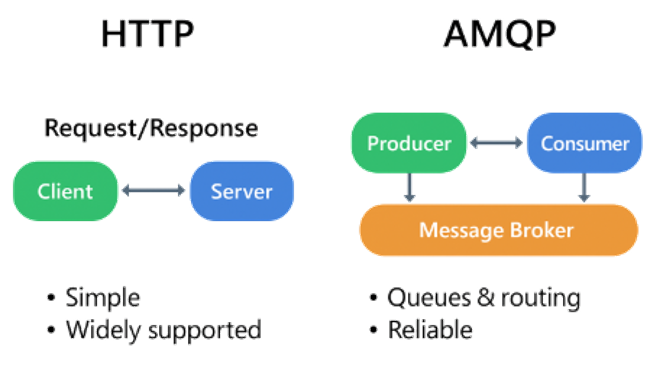
HTTP
HTTP is the workhorse of the web. It’s everywhere, it’s simple, and it’s supported by almost every platform and device. The model is request/response: the client asks for something, the server replies, and then the connection is done. HTTP is stateless, meaning every request is independent. That simplicity makes it easy to use, but it also makes it less suitable for continuous, real-time data flows. If you want to stream updates constantly, you either have to keep making new HTTP requests or hold the connection open in ways that HTTP wasn’t originally designed for.
AMQP
By contrast, AMQP — the Advanced Message Queuing Protocol — was designed from the ground up for messaging. It’s session-based rather than stateless, and it brings in features that are critical for real-time systems: queues, routing, acknowledgements, and guaranteed delivery. If a consumer goes offline temporarily, AMQP can hold the messages and deliver them later. It ensures ordering, handles retries, and supports publish/subscribe patterns out of the box. That makes it much more robust for continuous event streams where reliability is key.
Usage
So, in practice, you might use HTTP for simple, lightweight interactions — like sending a single status update, calling an API, or connecting a device with very limited capabilities. But if you need ongoing, reliable, high-volume event streams, AMQP is usually the better choice because it’s built for exactly that purpose.
AMQP avoids the connection overheads of HTTP when you are sending many messages.
Analogy: You can think of HTTP as like sending postcards through the mail. Each postcard is self-contained, and once you’ve sent it, the interaction is finished. If one gets lost, you might never know. By contrast, AMQP is like using a tracked courier service with many scheduled deliveries. The courier can guarantee delivery, confirm receipt, hold packages if you’re not home, and even manage multiple routes for efficiency. That’s why it’s the protocol of choice when reliability and continuity matter.
HTTP is simple and universal, but AMQP is reliable and purpose-built for streaming. When you’re designing real-time systems, you’ll often lean on AMQP for your critical pipelines, at least when you need to send a stream of events.
Learn more about Fabric RTI
If you really want to learn about RTI right now, we have an online on-demand course that you can enrol in, right now. You’ll find it at Mastering Microsoft Fabric Real-Time Intelligence
2026-02-08