
Fabric RTI 101: Filtering
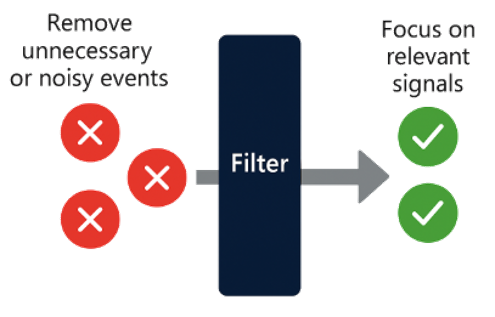
When we work with streaming data, one of the first transformations we often apply is filtering. The reality is that not every event is useful. In fact, in many scenarios, the vast majority of events are just background noise. Filtering gives us a way to narrow the stream down to only the events that actually matter for the business problem we’re solving.
Take IoT telemetry as an example. A device might send thousands of readings every hour, but if 99% of them show perfectly normal operating conditions, storing and analyzing them all just adds cost and complexity. By applying a filter, we could say: only keep the events where the temperature rises above 80 degrees Celsius, or only process readings where a vibration level exceeds a set threshold. This way, we’re focusing on signals of interest instead of wasting resources on noise.
The same idea applies in financial systems. Instead of passing every single transaction downstream, maybe we only flag those above a certain value, or those coming from specific regions. This doesn’t mean we ignore the rest entirely — we could still archive them if needed — but by filtering upfront, we make sure that real-time analytics and alerts concentrate on what’s important.
There’s also a very practical reason for filtering: cost and performance. Every event you let into the system consumes compute, storage, and network bandwidth. The more irrelevant events you allow through, the more expensive and sluggish your pipeline becomes. By reducing the event volume early, we not only save money but also make downstream processing faster and simpler.
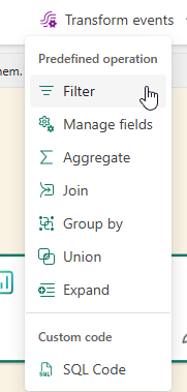
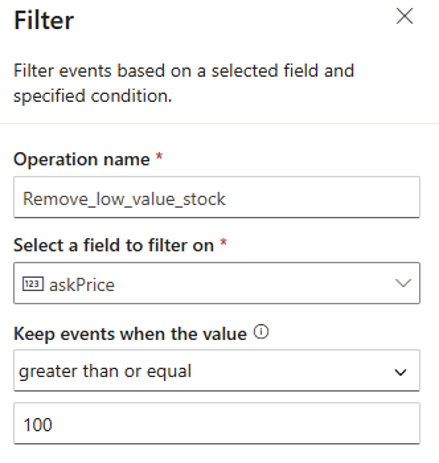
The good news is that in Fabric, filtering is easy to configure. You don’t need to write custom code — you can define filtering conditions visually in the Eventstream designer. For example, you can set a simple condition like temperature > 80 or transactionAmount > 1000. That means both technical teams and business analysts can work together to define the rules that keep the data stream focused on real value.
So filtering is really about precision and efficiency: cutting through the noise so that what flows through your real-time system is the data that drives action.
Learn more about Fabric RTI
If you really want to learn about RTI right now, we have an online on-demand course that you can enrol in, right now. You’ll find it at Mastering Microsoft Fabric Real-Time Intelligence
2026-04-01