
Fabric RTI 101: Data Quality in Real-Time
One of the biggest differences between batch ETL pipelines and real-time pipelines is how you manage data quality. In a batch world, you often have long, multi-step processes that validate, clean, and enrich data before it ever reaches your reports. You can afford those extra passes because the data isn’t needed instantly.
In a real-time system, you don’t have that luxury. Events arrive continuously, and you need to deal with problems on the fly. That means data quality checks have to be fast, lightweight, and built directly into your ingestion or processing stage.
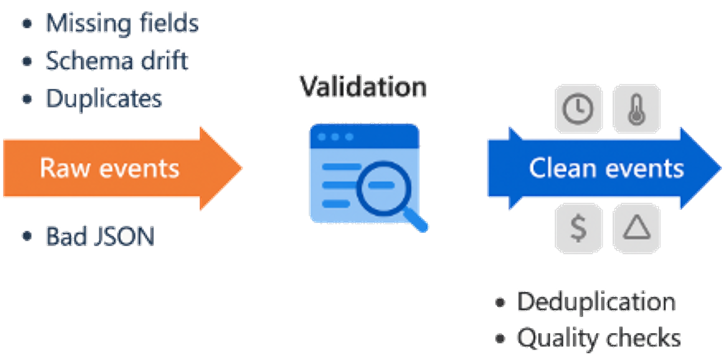
There are a few common challenges you’ll face. First, missing fields — some producers might not always populate every field. Second, schema drift — as upstream systems evolve, the shape of their data changes, sometimes without warning. And third, malformed inputs like bad JSON or corrupted messages, which can break downstream processing if not handled gracefully.
Another issue that comes up in real-time systems is duplicates. Because event pipelines often include retries for reliability, it’s possible for the same event to arrive more than once. If you don’t deduplicate, you risk double-counting or triggering duplicate actions — which is a big problem in scenarios like billing or fraud detection.
Fabric provides some tools to help here, particularly through KQL functions. For example, you can use isnull() to check if a field is missing, or todynamic() to safely parse JSON without throwing errors on bad input. These kinds of lightweight validations let you spot issues quickly and either fix them or route them out of the main stream.
The better the quality you enforce upstream, the less pain you’ll have downstream. If you let bad data through ingestion, every system downstream — whether it’s dashboards, warehouses, or automation — will have to deal with the mess. But if you clean and validate early, your whole pipeline runs smoother, faster, and more reliably.
Real-time pipelines need a different mindset: you’re not doing heavy ETL, but you’re doing smart, targeted checks at the edge to keep quality high without slowing things down.
Learn more about Fabric RTI
If you really want to learn about RTI right now, we have an online on-demand course that you can enrol in, right now. You’ll find it at Mastering Microsoft Fabric Real-Time Intelligence
2026-03-26